News
How a copycat website takes over your backlinks, and how we stop it
Updated 24 November 2026
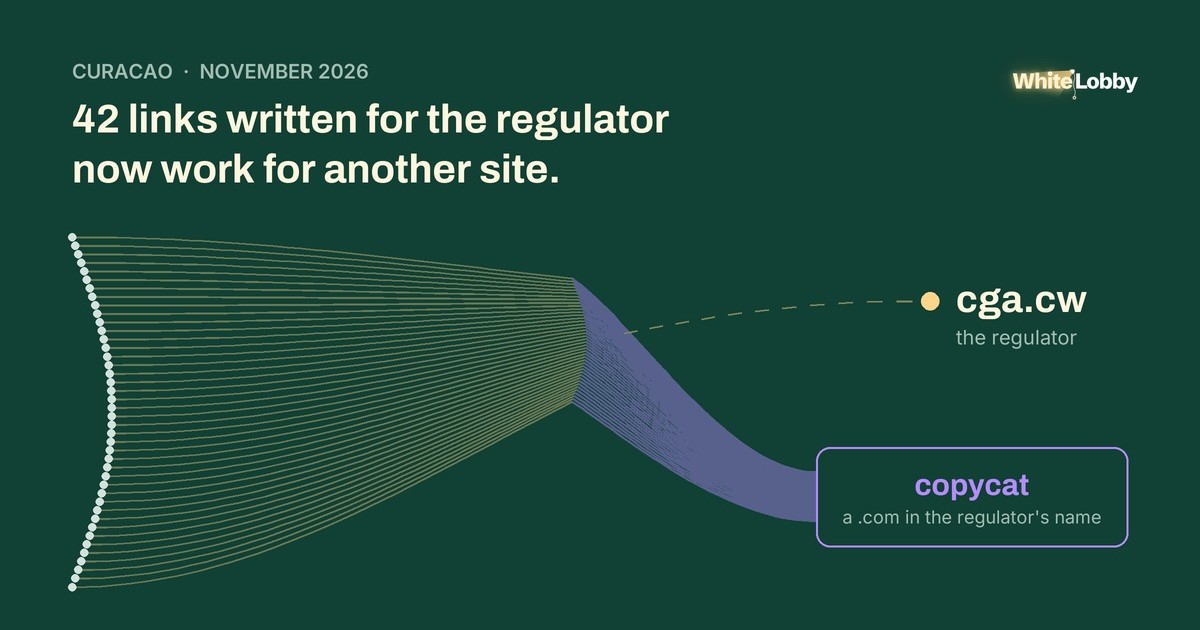
A copycat website does not need to hack anything to take your links. It needs your name, a fresh domain and one polite email to the sites that already link to you. This autumn a copycat did exactly that to Curacao's gambling regulator and walked away with 42 of its links, Times of Malta and SiGMA among them. The case shows how the scheme runs, what a brand loses at each step and how WhiteLobby can help you stop it.
The scheme, step by step
- Take the name. In July 2026 someone registered a .com with the name of the Curacao Gaming Authority, whose real site is cga.cw. For a brand it is the same move, a domain that reads like the brand with a different ending or a word added.
- Borrow a reason. The copycat dressed its page as the regulator's new website. The timing was chosen well. In October the real regulator announced that its old licensing portal would not come back, so a new website sounded plausible. Brands give copycats the same cover every time they rebrand, change a mirror or move a section.
- Write to the people who link to you. Publishers got an official-looking advisory asking them to update an old regulator link to the new address within 5 to 7 business days. For a brand the list is longer. Press, partners, affiliates, review sites and directories all hold links to it.
- Collect the links. Gaming Americas, which got the same email and checked it, counted 42 sites that had already made the change. Each of those links had been written for the regulator and now works for the copycat.
- Pass the value on. The copycat's page tells Google that its original version is a German affiliate page for Curacao casinos outside OASIS, Germany's self-exclusion register. The links the regulator earned now lift a site the regulator would never vouch for.
What the brand loses
Links from trusted sites are how Google and AI assistants decide which site is the real authority for a name. Every link that moves is a vote taken from the brand and given to the copycat. The more of them move, the more the copycat looks like the official site.
People follow the moved links too. A reader of a news story, a player who clicks an affiliate review, a partner checking a licence all land on the copycat. The Curacao copycat has a single page and no way to verify a licence, so anyone checking a casino's licence from those links gets nothing.
In iGaming the email is easier to believe than anywhere else. Brands change mirrors all the time, and affiliates are used to requests to update a link. Almost nobody checks who sent it.
When a copycat already has your links
WhiteLobby starts with the full picture. We find every link that moved, where it points now and when it changed, and we record the evidence. Then we go back to the publishers, partners and affiliates with proof of the official address and get the links pointed at the brand again. In parallel we act against the copycat itself, with its host and its registrar.
We also make the official address impossible to miss. The brand's own site, profiles and entity data tell Google, AI assistants and anyone who checks which domain is the real one, so the next request in the brand's name gets checked against it.
How we keep it from happening
For brands WhiteLobby works with, we track new domains that use the brand's name and where the brand's links point. A copycat shows up in our checks in its first days, before its emails go out or right after the first link moves. At that stage it is a handful of publishers to contact, and the copycat has collected nothing worth keeping.
Where do your links point today?
We check which domains use your brand's name and whether your press, partner and affiliate links still lead to you.
Ask us to check your links or email hello@whitelobby.com